
Slots may look similar at first glance, but differences in their payout systems change everything. Some games only pay out on specific lines, while others reward symbols on adjacent reels. And then there are those where you just need the right number of symbols anywhere on the screen. If you want to understand the difference between paylines, ways pays, and pays anywhere, you first need to know what exactly you’re looking at.

Ways Pays vs. Paylines: How To Identify A Slot’s Win System

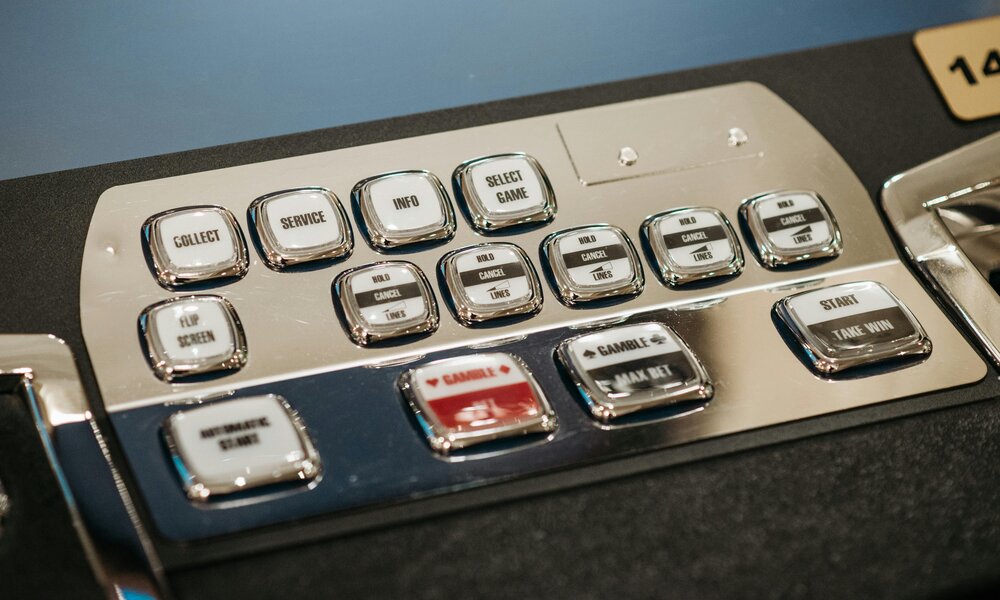
Slot machine control buttons showing paylines and info
If you have ever opened a slot and wondered whether it uses paylines, ways pays, or “pays anywhere,” you are not alone. The words sound interchangeable, but they describe different win rules. This guide shows you how to identify the win system quickly using only what you can see in the lobby and the paytable, so you can compare two different slots without guesswork. Game developers work hard to create UIs that will support clarity, but even so, in a world as varied as slots, things can get confusing.
What You Are Really Comparing
A slot has both a layout and a win system. Layout is what you see, like 3 reels versus 5 reels, and how many symbol positions appear on screen. The win system is how the game decides a symbol result counts as a win, like fixed paylines, ways pays (often called multiways), or a pays anywhere style rule. Mixing layout with win rules is where confusion starts.
A Lobby Example That Makes the Terms Click
To see this in action, let’s look at how a real lobby groups its games. In the slot lobby at Lucky Rebel Casino, the navigation includes categories like Pays Anywhere, Three Reels, and Five Reels, alongside broader lists such as Most Popular and All Slots. “Three Reels” and “Five Reels” are layout tags; they describe the grid you are about to see. “Pays Anywhere” is a tag about how wins are evaluated (although you will still need to read the game rules to understand the specifics of each title).
If you want to clarify the difference fast, pick a title from Pays Anywhere and a title from Three Reels, then open each game’s info screen before doing anything else. You are looking for the exact rule sentence or diagram that explains how wins connect. When you switch filters inside Lucky Rebel Casino between Pays Anywhere and the reel categories, treat it as a compare and contrast cue, a reminder that the lobby can sort by layout and by win style, but the paytable defines the rule.
The paytable matters because it is the game’s rulebook and it determines how it plays. Reading the rules will tell you whether symbols need to line up in clusters, diagonals, next to other symbols, etc. – whatever that individual game dictates. Always read the rulebook before you play, regardless of which game category you’re in.
Paylines Versus Ways Pays in 1 Minute
Start by finding the paytable or info button, then look for the line that states how wins are counted.
Paylines means wins depend on specific paths across the reels. Ways pays means wins are counted by matching symbols across consecutive reels without a fixed path. Pays anywhere is only meaningful after you read that game’s own definition, because the phrase can point to different patterns in different titles.
Use this 3-step checklist to keep your comparisons clean:
1. Name the win system in thepaytable
Look for explicit wording like paylines, ways, multiways, or pays anywhere. If it is not named, look for a diagram or a short rule line that implies it.
2. Confirm what “connected” means
For paylines, confirm whether lines are fixed or selectable. For ways, confirm whether matches must be on consecutive reels and whether position on the reel matters. For pays anywhere, find the exact qualifying pattern.
3. Check direction and special cases
Do not assume wins pay from left to right; always read the individual rules first. You should also confirm how scatters, feature triggers, and special symbols behave, because they can follow rules that are separate from paylines or ways.
Compare Two Slots Without Mixing Up Reels and Win Rules
When you compare two slots, separate the layout question from the win system question. Layout is quick to spot in the lobby. Win rules are only certain if you have checked the paytable. A simple option if you’re getting confused is to write out four fields for each game: layout (3 or 5 reels), win system (as defined in the paytable), win direction (as stated), and exceptions (like scatter payouts or feature triggers that do not depend on lines or ways). This keeps you from confusing “more reels” with “more ways,” and it makes your comparisons consistent across very different formats.
Once you do this a few times, the terminology stops feeling slippery. Reels describe the grid. Paylines describe paths. Ways pays describes reel-by-reel matching. Pays anywhere only becomes clear after you read the game’s own definition. Treat the lobby as a helpful filter, then let the paytable be the final word.
Why The Paytable Checklist Is Important
One reason win systems can feel confusing is that your brain often tries to fill in gaps when there’s some uncertainty around something. It will attempt to make sense of it even with limited information, which can lead to assumptions that aren’t necessarily correct. Having a checklist prevents that, encouraging you to seek concrete information about the rule sentence, the direction of wins, and any exceptions before you form a story.
Frequently asked questions
Kristyna Baranova
Verified by experts





















Discussion, comments and your experiences
Share your opinion, ask a question, or offer advice to others in the moderated discussion. Editors also participate, but they respond based on their current availability. If you expect a direct response, we recommend using email communication instead.